

Volume 11, Issue 2 (December 2025)
Elderly Health Journal 2025, 11(2): 176-185 |
Back to browse issues page


Download citation:
BibTeX | RIS | EndNote | Medlars | ProCite | Reference Manager | RefWorks
Send citation to:


BibTeX | RIS | EndNote | Medlars | ProCite | Reference Manager | RefWorks
Send citation to:
Ebrahimi M, Ghalandary P, Rostami M. Modeling the Quality of Life in Older Adults Based on Smartphone Use: The Mediating Role of Perceived Social Support and Personality Traits. Elderly Health Journal 2025; 11 (2) :176-185
URL: http://ehj.ssu.ac.ir/article-1-369-en.html
URL: http://ehj.ssu.ac.ir/article-1-369-en.html


Department of Counseling, Faculty of Humanities and Social Sciences, University of Kurdistan, Sanandaj, , m.rostami@uok.ac.ir
Full-Text [PDF 647 kb]
(269 Downloads)
| Abstract (HTML) (686 Views)
.png)
Methods
Study design
This study employed a quantitative research design with an applied purpose and a descriptive–correlational nature based on the structural equation modeling (SEM) approach.
Participants
The statistical population included older adults aged 60 years and above residing in Sanandaj City, Iran, during the year 2024. Following Klein’s (33) recommendation for SEM studies (a sample size between 2.5 to 7 times the number of items, with a minimum of 200 participants), and considering possible sample attrition as well as previous related studies, a total of 300 older adults (156 men and 144 women) were selected. Sampling was conducted using a purposive method.
The participants’ mean age was 64 years (SD = 4.11), ranging from 60 to 82 years. Of these, 52% were male (n = 156) and 48% were female (n = 144). In terms of education level, 22 participants (7.3%) had less than a high school diploma, 39 (13%) held a diploma, 53 (17.6%) an associate degree, 122 (40.5%) a bachelor’s degree, 40 (13.3%) a master’s degree, and 24 (8%) a doctoral degree. Regarding marital status, 17 (5.6%) were single, 235 (78.1%) were married, and 49 (16.3%) were separated or widowed. Most participants (272; 90.4%) lived with their families, while 29 (9.6%) lived alone or without family members.
Inclusion and exclusion criteria
The inclusion criteria were as follows: (1) being aged 60 years or older, expressing willingness and were able to participate in the study., (2) absence of severe physical or psychological disorders that could interfere with accurate completion of the questionnaires. Information regarding these criteria was obtained through self-reporting by the participants. Exclusion criteria included a lack of willingness to cooperate or failure to provide accurate and complete responses to the questionnaires.
Instruments
Smartphone Use Questionnaire (Researcher-Developed): This self-report questionnaire consists of six items assessing the extent and purpose of smartphone use during the past two weeks, including voice and video calls, internet use, entertainment, and leisure activities. Responses are rated on a binary scale (Yes/No). Cronbach’s alpha coefficient in the present study was 0.68, indicating acceptable internal consistency for exploratory research.
World Health Organization Quality of Life – Older Adults Module (WHOQOL-OLD): The WHOQOL-OLD is a multidimensional measure of quality of life in older adults that consist 24 items in six domains. The items’ responses are scored on a Likert type scale ranging from 1 to 5 and a higher total score represents better quality of life. The six subscales of the instrument include the respondent’s perception about his/her sensory abilities, autonomy, lifetime activities, social participation, intimacy with others, death and dying (34). The Persian version was validated by Rezaeipandari et al., (35). Their study supports the validity and reliability of the WHOQOL-OLD-P for use on Iranian and possibly other Persian-speaking older populations. The internal consistency and reliability indices of the WHOQOL-OLD-P were in the vicinity of acceptable range (Cronbach's alpha: 0.65-0.82 and ICC: 0.90-0.98).
Multidimensional Scale of Perceived Social Support (MSPSS): Developed by Zimet et al., (3). The MSPSS includes 12 items rated on a 7-point Likert scale (1 = strongly disagree to 7 = strongly agree). It assesses perceived social support from family, friends, and significant others, yielding total scores between 12 and 84. The overall Cronbach’s alpha reported by the developers was 0.89 (36). Psychometric properties have been confirmed across various populations (37). In Iranian samples, internal consistency coefficients were 0.89 for the total scale and 0.84, 0.85, and 0.89 for the subscales of significant others, family, and friends, respectively, with confirmatory factor analysis supporting the three-factor structure (38).
Ten-Item Personality Inventory (TIPI): The TIPI is a brief self-report measure assessing the Big Five personality traits extraversion, agreeableness, conscientiousness, emotional stability, and openness to experience. Developed and validated in the United States (39), it contains 10 items, each rated on a 7-point Likert scale from 1 (strongly disagree) to 7 (strongly agree). Each trait is represented by two items, and the TIPI has demonstrated adequate psychometric properties, including test–retest reliability, convergent and discriminant validity, and factorial structure (40, 41). In Iran, Azkhosh et al., (42) found the Persian version to have excellent test–retest reliability (r = 0.92) and satisfactory convergent validity (r = 0.41) among older adults. In the present study, Cronbach’s alpha = 0.78.
Procedure
Data collection was carried out in public spaces where older adults commonly gather, such as senior day centers, cultural centers, parks, and retirement clubs across Sanandaj. After obtaining informed consent, participants were assured of confidentiality and voluntary participation. Instructions for completing the questionnaires were provided clearly. Because some participants had limited literacy or difficulty comprehending written Persian, all questionnaires were administered in an interview format to ensure full understanding and accurate responses. Interviewers were trained to maintain neutrality and assist participants only with clarifying items, not influencing responses.
Statistical analysis
Data were analyzed using SPSS and AMOS software packages. Descriptive statistics (means, standard deviations, and frequencies) were first computed. Prior to hypothesis testing, data were screened for missing values, multivariate outliers, and normality assumptions. To test the research hypotheses, Pearson’s correlation coefficients, multiple linear regression (backward method, and path analysis were employed to identify significant and strong relationships among variables. All statistical tests were conducted using a significance level of p < 0.05.
Ethical considerations
The study utilized an anonymous questionnaire to ensure participant confidentiality. Participants were made aware that their participation was voluntary and the study process and the required time for respond to the questionnaires were explained to older people, then Informed consent was obtained to clarify the research objectives and assess participants’ comprehension. Only the investigators had access to the collected data. The Research Ethics Committee Kurdistan University approved the study (IR.UOK.REC.1403.033).
Results
Table 1 presents the descriptive statistics and internal consistency coefficients of the study variables. Before evaluating the fit of the conceptual model, the data were screened, and outliers were identified using box plots. The skewness and kurtosis values were in the range of (+2 and -2). The assumption of data normality was then tested through the Shapiro-Wilk test, which confirmed that the research variables followed a normal distribution (p > 0.05).
Since no overall or composite score is conceptually justified or expected for the personality-traits variable, and in order to identify the prominent personality characteristic serving as the mediator, the dimensional (subscale) scores are used and reported instead. To examine the relationships among the study variables, Pearson correlation coefficients were first computed. The correlation matrices among all study variables are presented in Tables 2.
Results of the Pearson Correlation Test presented in Table 2 indicate that there is a significant positive relationship between smartphone use and quality of life among older adults (r = 0.17, p < 0.01). Moreover, the calculated correlation coefficients show that smartphone use is positively and significantly associated with perceived social support (r = 0.22, p < 0.01) as well as with the personality traits of extraversion and openness (r = 0.14, p < 0.05).
To examine the role of variables in predicting quality of life, a backward regression analysis was conducted. In total, seven variables were entered into the equation, and the effects of all variables on the dependent variable were assessed separately. Weaker and less influential predictors were gradually removed from the model, and after four steps, four variables openness, smartphone use, emotional stability, and perceived social support met the inclusion criteria. The results are presented in Tables 3 and 4. The validity of the final regression model was confirmed using the stepwise method for predicting quality of life (F = 18.99, p < 0.01). One of the assumptions of regression analysis concerns the independence of errors, meaning that the residuals (differences between the actual and predicted values) should not be correlated. The Durbin–Watson statistic, which falls within the acceptable range of 1.5 to 2.5, indicates that the assumption of no autocorrelation among residuals was met, thus validating the use of regression analysis.
The obtained value of R²= 0.169 indicates that approximately 17% of the variance in the dependent variable (quality of life) is explained by the model. The F-ratio (F = 15.05) is significant at the 99% confidence level, suggesting that the current linear regression model is statistically significant and can be used for predictive purposes.
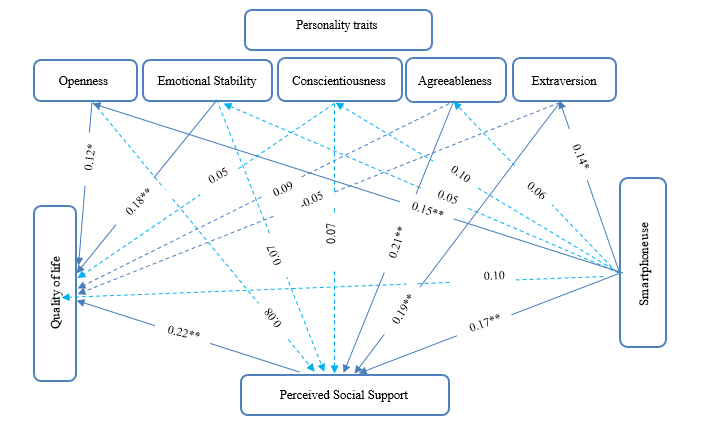
Figure 2. Standardized coefficients of the path model of research variables
Table 5. indirect effects of smartphone use on quality of life mediated by personality traits and perceived social support, and their significance levels
*p < 0.05; **p < 0.01
Table 6. Model Fit Indices
References
Full-Text: (203 Views)
Modeling the Quality of Life in Older Adults Based on Smartphone Use: The Mediating Role of Perceived Social Support and Personality Traits
Mohammad Ebrahimi 1, Peyman Ghalandary 1, Mohammad Rostami 1*
* Corresponding Author: Department of Counseling, Faculty of Humanities and Social Sciences, University of Kurdistan, Sanandaj, Iran. Tel: +98 9144742871, Email address: m.rostami@uok.ac.ir
Article history
Received 7 Nov 2025
Accepted 20 Dec 2025
A B S T R A C T
Mohammad Ebrahimi 1, Peyman Ghalandary 1, Mohammad Rostami 1*
- Department of Counseling, Faculty of Humanities and Social Sciences, University of Kurdistan, Sanandaj, Iran
* Corresponding Author: Department of Counseling, Faculty of Humanities and Social Sciences, University of Kurdistan, Sanandaj, Iran. Tel: +98 9144742871, Email address: m.rostami@uok.ac.ir
Article history
Received 7 Nov 2025
Accepted 20 Dec 2025
A B S T R A C T
Introduction: The use of accessible technologies and their practical applications can play a significant role in helping older adults overcome physical and cognitive limitations, frustration, or the loss of active roles in life. This study aimed to investigate the relationship between smartphone use and quality of life, examining the mediating roles of personality traits and perceived social support among Iranian older adults.
Methods: This cross-sectional correlational study employed structural equation modeling (SEM). A total of 300 older adults were selected using purposive sampling. The instruments included a researcher-developed questionnaire on smartphone use, the World Health Organization Quality of Life Scale for Older Adults, the Multidimensional Scale of Perceived Social Support, and the Ten-Item Personality Inventory. Data were analyzed using SEM and multiple regression.
Results: Smartphone use was significantly correlated with quality of life (p < 0.01). Regression analysis showed that perceived social support (β = 0.235, P < 0.01), emotional stability (β = 0.201, p < 0.01), and openness (β = 0.117, p < 0.05) significantly predicted quality of life among older adults. Furthermore, openness and perceived social support mediated the indirect relationship between smartphone use and quality of life. In addition, extraversion and perceived social support jointly served as combined mediators between the predictor and criterion variables.
Conclusion: Smartphone use through the mediating effect of perceived social support, particularly when accompanied by the personality traits of extraversion and openness—can enhance and improve the quality of life in older adults.
Keywords: Smartphone, Quality of Life, Perceived Social Support, Personality Traits
Copyright © 2025 The Author(s). This is an open-access article distributed under the terms of the Creative Commons Attribution-Non Commercial 4.0 International License (http://creativecommons.org/licenses/by-nc/4.0/) which permits copy and redistribute the material just in noncommercial usages, provided the original work is properly cite.
Methods: This cross-sectional correlational study employed structural equation modeling (SEM). A total of 300 older adults were selected using purposive sampling. The instruments included a researcher-developed questionnaire on smartphone use, the World Health Organization Quality of Life Scale for Older Adults, the Multidimensional Scale of Perceived Social Support, and the Ten-Item Personality Inventory. Data were analyzed using SEM and multiple regression.
Results: Smartphone use was significantly correlated with quality of life (p < 0.01). Regression analysis showed that perceived social support (β = 0.235, P < 0.01), emotional stability (β = 0.201, p < 0.01), and openness (β = 0.117, p < 0.05) significantly predicted quality of life among older adults. Furthermore, openness and perceived social support mediated the indirect relationship between smartphone use and quality of life. In addition, extraversion and perceived social support jointly served as combined mediators between the predictor and criterion variables.
Conclusion: Smartphone use through the mediating effect of perceived social support, particularly when accompanied by the personality traits of extraversion and openness—can enhance and improve the quality of life in older adults.
Keywords: Smartphone, Quality of Life, Perceived Social Support, Personality Traits
Copyright © 2025 The Author(s). This is an open-access article distributed under the terms of the Creative Commons Attribution-Non Commercial 4.0 International License (http://creativecommons.org/licenses/by-nc/4.0/) which permits copy and redistribute the material just in noncommercial usages, provided the original work is properly cite.
Introduction
The issue of aging and the phenomenon of population aging often referred to as a demographic revolution, has become an increasingly critical challenge across the world, including in Iran (1-3). As individuals grow older and enter the stage of old age, they gradually lose certain biological and psychosocial functions, and encounter a wide range of losses and limitations. This stage is characterized by biological changes such as decreased physical abilities, cognitive changes such as slower information processing, and social changes including retirement or a shrinking social network (2). Aging is also associated with an increased risk of chronic diseases, reduced independence, and a greater need for care and support, all of which can significantly influence quality of life (4).
Quality of life (QoL) refers to an individual’s perception of their position and condition in life (5). As a multidimensional construct, it encompasses physical health, psychological well-being, and social relationships domains that hold particular importance for older adults due to age-related changes (4). With the rising average age of the global population and the growing penetration of digital technologies, examining the impact of smartphone use on the quality of life of older adults has become a prominent topic in health and psychological research (6). Moreover, with technological advancement, the use of electronic devices such as smartphones has become increasingly common among older adults (7), and a growing number of elderly individuals are engaging with smartphone functions and social media platforms (8). Smartphones, by providing communication tools, access to health information, and various applications, have the potential to enhance older adults’ quality of life (9, 10). However, this effect may be influenced by contextual or moderating factors.
Numerous individual and interpersonal variables are involved in the relationship between smartphone use and quality of life among the elderly. Foremost among these are developmental contexts, particularly personality traits, which shape each individual’s psychological structure and lifestyle. Research evidence indicates that personality traits serve as significant individual background variables in predicting and explaining quality of life (11–15). Conversely, quality of life can affect various aspects of personality, influencing how individuals act, react, and adapt to their environment and life events (16). Among these related factors, perceived social support plays a particularly critical role. It refers to the individual’s perception or experience of being loved, cared for, respected, and valued by others, and of being part of an active social network (17, 18). Numerous studies have shown that perceived social support not only affects overall health but also plays a vital role for older adults facing physical, cognitive, social, or psychological challenges associated with aging and life transitions (19–24). Notably, the relationship between personality traits and perceived social support is well established. For example, individuals high in agreeableness may perceive greater social support due to their empathic behaviors and stronger social ties, whereas neuroticism tends to be associated with lower levels of perceived social support, as anxious individuals may interpret social interactions more negatively (25). Furthermore, smartphone use itself may be influenced by the interplay between personality traits and perceived social support. For instance, older adults with high extraversion and strong perceived social support may use communication applications to strengthen their social relationships, while those high in openness to experience and possessing sufficient social support may be more inclined to learn and adopt new technologies (26).
Although excessive smartphone use has been linked to potential risks such as technology addiction or reduced sleep quality particularly among older adults with declining cognitive performance (27). The greatest barriers to smartphone use in this population are not merely age or diminished learning ability. Instead, the lack of awareness of its necessity or the absence of standardized training appears to be the main challenges (28-30). Instead of prematurely rejecting this technology, research gaps in this field can be addressed in line with the successful aging approach. Using smartphones and their various features such as internet connectivity and social networking can empower older adults to overcome physical, cognitive, and social limitations, as well as feelings of frustration or loss of active life roles (31). Smartphone use not only reduces healthcare costs but also provides easy access to care. It also strengthens patient–caregiver relationships and enhances self-care, especially among older adults, For instance, mobile health applications can play a key role in managing chronic conditions such as diabetes among elderly patients (32), while social networking platforms can help fulfill their social needs (29). Therefore, studying the multifaceted dimensions of smartphone use can offer insights into addressing several issues and challenges associated with aging. Given the psychosocial and physiological transformations of this life stage, it is essential to consider the emerging needs of older adults. In particular, investigating the conditions and correlates of smartphone use and its potential benefits among Iranian elderly who may have the greatest need for such technologies is of great importance.
Accordingly, the present study aims to examine the mediating role of perceived social support and personality traits in the relationship between smartphone use and quality of life among older adults. Specifically, it seeks to answer two key questions: (a) Does smartphone use influence the quality of life of Iranian older adults? (b) How do personality traits and perceived social support interact with smartphone use to affect quality of life in this population? The figure below shows the relationship of the variables and paths under investigation. (Figure 1)
Quality of life (QoL) refers to an individual’s perception of their position and condition in life (5). As a multidimensional construct, it encompasses physical health, psychological well-being, and social relationships domains that hold particular importance for older adults due to age-related changes (4). With the rising average age of the global population and the growing penetration of digital technologies, examining the impact of smartphone use on the quality of life of older adults has become a prominent topic in health and psychological research (6). Moreover, with technological advancement, the use of electronic devices such as smartphones has become increasingly common among older adults (7), and a growing number of elderly individuals are engaging with smartphone functions and social media platforms (8). Smartphones, by providing communication tools, access to health information, and various applications, have the potential to enhance older adults’ quality of life (9, 10). However, this effect may be influenced by contextual or moderating factors.
Numerous individual and interpersonal variables are involved in the relationship between smartphone use and quality of life among the elderly. Foremost among these are developmental contexts, particularly personality traits, which shape each individual’s psychological structure and lifestyle. Research evidence indicates that personality traits serve as significant individual background variables in predicting and explaining quality of life (11–15). Conversely, quality of life can affect various aspects of personality, influencing how individuals act, react, and adapt to their environment and life events (16). Among these related factors, perceived social support plays a particularly critical role. It refers to the individual’s perception or experience of being loved, cared for, respected, and valued by others, and of being part of an active social network (17, 18). Numerous studies have shown that perceived social support not only affects overall health but also plays a vital role for older adults facing physical, cognitive, social, or psychological challenges associated with aging and life transitions (19–24). Notably, the relationship between personality traits and perceived social support is well established. For example, individuals high in agreeableness may perceive greater social support due to their empathic behaviors and stronger social ties, whereas neuroticism tends to be associated with lower levels of perceived social support, as anxious individuals may interpret social interactions more negatively (25). Furthermore, smartphone use itself may be influenced by the interplay between personality traits and perceived social support. For instance, older adults with high extraversion and strong perceived social support may use communication applications to strengthen their social relationships, while those high in openness to experience and possessing sufficient social support may be more inclined to learn and adopt new technologies (26).
Although excessive smartphone use has been linked to potential risks such as technology addiction or reduced sleep quality particularly among older adults with declining cognitive performance (27). The greatest barriers to smartphone use in this population are not merely age or diminished learning ability. Instead, the lack of awareness of its necessity or the absence of standardized training appears to be the main challenges (28-30). Instead of prematurely rejecting this technology, research gaps in this field can be addressed in line with the successful aging approach. Using smartphones and their various features such as internet connectivity and social networking can empower older adults to overcome physical, cognitive, and social limitations, as well as feelings of frustration or loss of active life roles (31). Smartphone use not only reduces healthcare costs but also provides easy access to care. It also strengthens patient–caregiver relationships and enhances self-care, especially among older adults, For instance, mobile health applications can play a key role in managing chronic conditions such as diabetes among elderly patients (32), while social networking platforms can help fulfill their social needs (29). Therefore, studying the multifaceted dimensions of smartphone use can offer insights into addressing several issues and challenges associated with aging. Given the psychosocial and physiological transformations of this life stage, it is essential to consider the emerging needs of older adults. In particular, investigating the conditions and correlates of smartphone use and its potential benefits among Iranian elderly who may have the greatest need for such technologies is of great importance.
Accordingly, the present study aims to examine the mediating role of perceived social support and personality traits in the relationship between smartphone use and quality of life among older adults. Specifically, it seeks to answer two key questions: (a) Does smartphone use influence the quality of life of Iranian older adults? (b) How do personality traits and perceived social support interact with smartphone use to affect quality of life in this population? The figure below shows the relationship of the variables and paths under investigation. (Figure 1)
Methods
Study design
This study employed a quantitative research design with an applied purpose and a descriptive–correlational nature based on the structural equation modeling (SEM) approach.
Participants
The statistical population included older adults aged 60 years and above residing in Sanandaj City, Iran, during the year 2024. Following Klein’s (33) recommendation for SEM studies (a sample size between 2.5 to 7 times the number of items, with a minimum of 200 participants), and considering possible sample attrition as well as previous related studies, a total of 300 older adults (156 men and 144 women) were selected. Sampling was conducted using a purposive method.
The participants’ mean age was 64 years (SD = 4.11), ranging from 60 to 82 years. Of these, 52% were male (n = 156) and 48% were female (n = 144). In terms of education level, 22 participants (7.3%) had less than a high school diploma, 39 (13%) held a diploma, 53 (17.6%) an associate degree, 122 (40.5%) a bachelor’s degree, 40 (13.3%) a master’s degree, and 24 (8%) a doctoral degree. Regarding marital status, 17 (5.6%) were single, 235 (78.1%) were married, and 49 (16.3%) were separated or widowed. Most participants (272; 90.4%) lived with their families, while 29 (9.6%) lived alone or without family members.
Inclusion and exclusion criteria
The inclusion criteria were as follows: (1) being aged 60 years or older, expressing willingness and were able to participate in the study., (2) absence of severe physical or psychological disorders that could interfere with accurate completion of the questionnaires. Information regarding these criteria was obtained through self-reporting by the participants. Exclusion criteria included a lack of willingness to cooperate or failure to provide accurate and complete responses to the questionnaires.
Instruments
Smartphone Use Questionnaire (Researcher-Developed): This self-report questionnaire consists of six items assessing the extent and purpose of smartphone use during the past two weeks, including voice and video calls, internet use, entertainment, and leisure activities. Responses are rated on a binary scale (Yes/No). Cronbach’s alpha coefficient in the present study was 0.68, indicating acceptable internal consistency for exploratory research.
World Health Organization Quality of Life – Older Adults Module (WHOQOL-OLD): The WHOQOL-OLD is a multidimensional measure of quality of life in older adults that consist 24 items in six domains. The items’ responses are scored on a Likert type scale ranging from 1 to 5 and a higher total score represents better quality of life. The six subscales of the instrument include the respondent’s perception about his/her sensory abilities, autonomy, lifetime activities, social participation, intimacy with others, death and dying (34). The Persian version was validated by Rezaeipandari et al., (35). Their study supports the validity and reliability of the WHOQOL-OLD-P for use on Iranian and possibly other Persian-speaking older populations. The internal consistency and reliability indices of the WHOQOL-OLD-P were in the vicinity of acceptable range (Cronbach's alpha: 0.65-0.82 and ICC: 0.90-0.98).
Multidimensional Scale of Perceived Social Support (MSPSS): Developed by Zimet et al., (3). The MSPSS includes 12 items rated on a 7-point Likert scale (1 = strongly disagree to 7 = strongly agree). It assesses perceived social support from family, friends, and significant others, yielding total scores between 12 and 84. The overall Cronbach’s alpha reported by the developers was 0.89 (36). Psychometric properties have been confirmed across various populations (37). In Iranian samples, internal consistency coefficients were 0.89 for the total scale and 0.84, 0.85, and 0.89 for the subscales of significant others, family, and friends, respectively, with confirmatory factor analysis supporting the three-factor structure (38).
Ten-Item Personality Inventory (TIPI): The TIPI is a brief self-report measure assessing the Big Five personality traits extraversion, agreeableness, conscientiousness, emotional stability, and openness to experience. Developed and validated in the United States (39), it contains 10 items, each rated on a 7-point Likert scale from 1 (strongly disagree) to 7 (strongly agree). Each trait is represented by two items, and the TIPI has demonstrated adequate psychometric properties, including test–retest reliability, convergent and discriminant validity, and factorial structure (40, 41). In Iran, Azkhosh et al., (42) found the Persian version to have excellent test–retest reliability (r = 0.92) and satisfactory convergent validity (r = 0.41) among older adults. In the present study, Cronbach’s alpha = 0.78.
Procedure
Data collection was carried out in public spaces where older adults commonly gather, such as senior day centers, cultural centers, parks, and retirement clubs across Sanandaj. After obtaining informed consent, participants were assured of confidentiality and voluntary participation. Instructions for completing the questionnaires were provided clearly. Because some participants had limited literacy or difficulty comprehending written Persian, all questionnaires were administered in an interview format to ensure full understanding and accurate responses. Interviewers were trained to maintain neutrality and assist participants only with clarifying items, not influencing responses.
Statistical analysis
Data were analyzed using SPSS and AMOS software packages. Descriptive statistics (means, standard deviations, and frequencies) were first computed. Prior to hypothesis testing, data were screened for missing values, multivariate outliers, and normality assumptions. To test the research hypotheses, Pearson’s correlation coefficients, multiple linear regression (backward method, and path analysis were employed to identify significant and strong relationships among variables. All statistical tests were conducted using a significance level of p < 0.05.
Ethical considerations
The study utilized an anonymous questionnaire to ensure participant confidentiality. Participants were made aware that their participation was voluntary and the study process and the required time for respond to the questionnaires were explained to older people, then Informed consent was obtained to clarify the research objectives and assess participants’ comprehension. Only the investigators had access to the collected data. The Research Ethics Committee Kurdistan University approved the study (IR.UOK.REC.1403.033).
Results
Table 1 presents the descriptive statistics and internal consistency coefficients of the study variables. Before evaluating the fit of the conceptual model, the data were screened, and outliers were identified using box plots. The skewness and kurtosis values were in the range of (+2 and -2). The assumption of data normality was then tested through the Shapiro-Wilk test, which confirmed that the research variables followed a normal distribution (p > 0.05).
Since no overall or composite score is conceptually justified or expected for the personality-traits variable, and in order to identify the prominent personality characteristic serving as the mediator, the dimensional (subscale) scores are used and reported instead. To examine the relationships among the study variables, Pearson correlation coefficients were first computed. The correlation matrices among all study variables are presented in Tables 2.
Results of the Pearson Correlation Test presented in Table 2 indicate that there is a significant positive relationship between smartphone use and quality of life among older adults (r = 0.17, p < 0.01). Moreover, the calculated correlation coefficients show that smartphone use is positively and significantly associated with perceived social support (r = 0.22, p < 0.01) as well as with the personality traits of extraversion and openness (r = 0.14, p < 0.05).
To examine the role of variables in predicting quality of life, a backward regression analysis was conducted. In total, seven variables were entered into the equation, and the effects of all variables on the dependent variable were assessed separately. Weaker and less influential predictors were gradually removed from the model, and after four steps, four variables openness, smartphone use, emotional stability, and perceived social support met the inclusion criteria. The results are presented in Tables 3 and 4. The validity of the final regression model was confirmed using the stepwise method for predicting quality of life (F = 18.99, p < 0.01). One of the assumptions of regression analysis concerns the independence of errors, meaning that the residuals (differences between the actual and predicted values) should not be correlated. The Durbin–Watson statistic, which falls within the acceptable range of 1.5 to 2.5, indicates that the assumption of no autocorrelation among residuals was met, thus validating the use of regression analysis.
The obtained value of R²= 0.169 indicates that approximately 17% of the variance in the dependent variable (quality of life) is explained by the model. The F-ratio (F = 15.05) is significant at the 99% confidence level, suggesting that the current linear regression model is statistically significant and can be used for predictive purposes.
Table 1. Descriptive characteristics of the study variables (n = 300)
Table 2. Correlation matrix of the study variables
*p < .05; **p < .01
Table 3. Summary of backward regression analysis predicting quality of life based on smartphone use, perceived social support, and personality traits (final step)
Table 4. Regression coefficients of predictor variables for quality of life in the final step
| Variable | M | SD | Min | Max | Skewness | Kurtosis | α | |
| Smartphone use | 6.33 | 0.79 | 4 | 7 | -0.845 | -0.424 | 0.68 | |
| Perceived social support | 44.42 | 8.76 | 20 | 60 | -0.643 | 0.029 | 0.86 | |
| Quality of life | 80.59 | 11.88 | 50 | 110 | -0.035 | -0.429 | 0.89 | |
| Personality traits | Extraversion | 7.42 | 1.79 | 2 | 12 | -0.391 | -0.019 | 0.60 |
| Agreeableness | 7.71 | 1.37 | 4 | 11 | -0.264 | 0.071 | ||
| Conscientiousness | 7.69 | 1.54 | 3 | 11 | -0.352 | 0.232 | ||
| Emotional stability | 7.54 | 1.38 | 4 | 11 | -0.131 | 0.280 | ||
| openness | 7.99 | 1.80 | 4 | 12 | 0.126 | -0.466 | ||
Table 2. Correlation matrix of the study variables
| Variables | 1 | 2 | 3 | 4 | 5 | 6 | 7 | 8 | |
| 1 | Smartphone use | 1 | |||||||
| 2 | Quality of life | 0.173** | 1 | ||||||
| 3 | Perceived social support | 0.227** | 0.317** | 1 | |||||
| 4 | Extraversion | 0.149* | 0.101 | 0.271* | 1 | ||||
| 5 | Agreeableness | 0.063 | 0.234** | 0.293** | 0.144* | 1 | |||
| 6 | Conscientiousness | 0.099 | 0.128* | 0.179** | 0.274** | 0.155** | 1 | ||
| 7 | Emotional stability | 0.047 | 0.272** | 0.202** | 0.171** | 0.331** | 0.143* | 1 | |
| 8 | Openness | 0.148* | 0.206** | 0.175** | 0.126* | 0.165** | 0.048 | 0.153* | 1 |
Table 3. Summary of backward regression analysis predicting quality of life based on smartphone use, perceived social support, and personality traits (final step)
| Model | R | R² | Adjusted R² | Standard Error | Durbin–Watson | F | p |
| (1) | 0.411 | 0.169 | 0.158 | 10.89 | 1.834 | 15.05 | 0.001 |
Table 4. Regression coefficients of predictor variables for quality of life in the final step
| Model | Criterion Variable | Predictor Variable | B | SE | β | t | p |
| 1 | Quality of life | Smartphone Use | 1.37 | 0.815 | 0.093 | 1.691 | 0.090 |
| Perceived Social Support | 0.319 | 0.076 | 0.235 | 4.212 | 0.001 | ||
| Trait – Emotional Stability | 1.707 | 0.468 | 0.201 | 3.651 | 0.001 | ||
| Trait – Openness | 0.771 | 0.359 | 0.117 | 2.141 | 0.033 |
The results of the regression analysis, presented in Table 4, indicate that among the variables under study, three perceived social support (β= 0.23, p < 0.01), emotional stability (β= 0.201, p < 0.01), and openness (β= 0.117, p < 0.01) were significant predictors of quality of life among older adults. However, the direct effect of smartphone use on quality of life was not found to be significant.
As mentioned earlier, it appears that perceived social support and personality traits may serve as mediating or moderating variables between the predictor variables and the criterion variable. Therefore, to examine the possible pathways from smartphone use to perceived social support or personality traits, and subsequently to quality of life, a path analysis was conducted using AMOS version 26. The results of this analysis are presented in Figure 2 and Table 5.
For greater clarity in the path diagram presented above, the non-significant paths are shown with dashed lines. Table 5 reports the estimates of indirect effects and their corresponding levels of statistical significance. The standardized direct (unmediated) effect of smartphone use on quality of life was found to be 0.096, indicating that for every one standard deviation increase in smartphone use, quality of life increases by 0.096 standard deviations. This represents the direct effect, in addition to any indirect (mediated) effects that smartphone use may exert on quality of life through other variables. However, the direct effect of smartphone use on quality of life was not significant in the final model.
Path analysis results indicated that smartphone use exerted a significant indirect effect on quality of life via the personality trait of openness to experience (indirect effect = 0.25, p < 0.05; Path 5). Similarly, perceived social support served as a significant mediator in the relationship between smartphone use and quality of life (indirect effect = 0.54, p < 0.01; Path 6). Moreover, extraversion and perceived social support jointly mediated the association between smartphone use and quality of life (indirect effect = 0.08, p < 0.03; Path 7).
Overall, the findings indicate that beyond the simple mediating effects of openness to experience and perceived social support, a significant serial mediation pathway was observed. Specifically, smartphone use was associated with increased extraversion, which subsequently enhanced perceived social support, ultimately leading to improved quality of life. The proposed model explained 15% of the variance in perceived social support through smartphone use, and 19% of the variance in quality of life through smartphone use, mediated by personality traits and perceived social support .The goodness-of-fit indices for the proposed model, estimated using the maximum likelihood method after removing non-significant paths related to the mediating variables (Agreeableness, conscientiousness, and emotional stability), indicated an acceptable overall model fit (Table 6). To improve model fit, modification indices (MI) were inspected, and paths suggested for removal were carefully evaluated against theoretical justification from previous research.
The normed chi-square (CMIN/DF) value should be less than 3; however, Miller et al., suggest that values below 5 are also considered acceptable. Additionally, values above 0.90 for the Goodness-of-Fit Index (GFI), Adjusted Goodness-of-Fit Index (AGFI), Comparative Fit Index (CFI), and Incremental Fit Index (IFI) are regarded as indicators of a good model fit. For the Root Mean Square Error of Approximation (RMSEA), values in the range of 0.05 to 0.08 are considered acceptable (30).
As mentioned earlier, it appears that perceived social support and personality traits may serve as mediating or moderating variables between the predictor variables and the criterion variable. Therefore, to examine the possible pathways from smartphone use to perceived social support or personality traits, and subsequently to quality of life, a path analysis was conducted using AMOS version 26. The results of this analysis are presented in Figure 2 and Table 5.
For greater clarity in the path diagram presented above, the non-significant paths are shown with dashed lines. Table 5 reports the estimates of indirect effects and their corresponding levels of statistical significance. The standardized direct (unmediated) effect of smartphone use on quality of life was found to be 0.096, indicating that for every one standard deviation increase in smartphone use, quality of life increases by 0.096 standard deviations. This represents the direct effect, in addition to any indirect (mediated) effects that smartphone use may exert on quality of life through other variables. However, the direct effect of smartphone use on quality of life was not significant in the final model.
Path analysis results indicated that smartphone use exerted a significant indirect effect on quality of life via the personality trait of openness to experience (indirect effect = 0.25, p < 0.05; Path 5). Similarly, perceived social support served as a significant mediator in the relationship between smartphone use and quality of life (indirect effect = 0.54, p < 0.01; Path 6). Moreover, extraversion and perceived social support jointly mediated the association between smartphone use and quality of life (indirect effect = 0.08, p < 0.03; Path 7).
Overall, the findings indicate that beyond the simple mediating effects of openness to experience and perceived social support, a significant serial mediation pathway was observed. Specifically, smartphone use was associated with increased extraversion, which subsequently enhanced perceived social support, ultimately leading to improved quality of life. The proposed model explained 15% of the variance in perceived social support through smartphone use, and 19% of the variance in quality of life through smartphone use, mediated by personality traits and perceived social support .The goodness-of-fit indices for the proposed model, estimated using the maximum likelihood method after removing non-significant paths related to the mediating variables (Agreeableness, conscientiousness, and emotional stability), indicated an acceptable overall model fit (Table 6). To improve model fit, modification indices (MI) were inspected, and paths suggested for removal were carefully evaluated against theoretical justification from previous research.
The normed chi-square (CMIN/DF) value should be less than 3; however, Miller et al., suggest that values below 5 are also considered acceptable. Additionally, values above 0.90 for the Goodness-of-Fit Index (GFI), Adjusted Goodness-of-Fit Index (AGFI), Comparative Fit Index (CFI), and Incremental Fit Index (IFI) are regarded as indicators of a good model fit. For the Root Mean Square Error of Approximation (RMSEA), values in the range of 0.05 to 0.08 are considered acceptable (30).
Figure 2. Standardized coefficients of the path model of research variables
Table 5. indirect effects of smartphone use on quality of life mediated by personality traits and perceived social support, and their significance levels
| Path | Indirect Effect | Significance (p) | |
| 1 | Smartphone use → Extraversion → Quality of life | -0.094 | 0.527 |
| 2 | Smartphone use → Agreeableness → Quality of life | 0.080 | 0.382 |
| 3 | Smartphone use → Conscientiousness → Quality of life | 0.070 | 0.468 |
| 4 | Smartphone use → Emotional stability → Quality of life | 0.124 | 0.413 |
| 5 | Smartphone use → Openness → Quality of life | 0.249* | 0.048 |
| 6 | Smartphone use → Perceived social support → Quality of Life (QL) | 0.544** | 0.007 |
| 7 | Smartphone use → Extraversion → Perceived social support → QL | 0.087* | 0.035 |
| 8 | Smartphone use → Agreeableness → Perceived social support → QL | 0.043 | 0.282 |
| 9 | Smartphone use → Conscientiousness → Perceived social support → QL | 0.021 | 0.344 |
| 10 | Smartphone use → Emotional stability → Perceived social support → QL | 0.011 | 0.533 |
| 11 | Smartphone use → Openness → Perceived Social Support → QL | 0.037 | 0.145 |
| Total indirect effect (personality traits and perceived social support) | 0.080 | 0.003 | |
Table 6. Model Fit Indices
| Stage | CMIN/df | IFI | NFI | CFI | GFI | AGFI | RMSEA |
| Before | 8.61 | 0.65 | 0.619 | 0.616 | 0.924 | 0.725 | 0.159 |
| After | 2.02 | 0.968 | 0.939 | 0.966 | 0.992 | 0.96 | 0.058 |
Discussion
The present study aimed to examine the structural relationship between smartphone use and quality of life with mediating role of perceived social support and personality trait among older adults. The results indicated a significant association between smartphone use and quality of life among older adults. Regression analysis further demonstrated that perceived social support, emotional stability, and openness could predict quality of life in the elderly. However, the direct role of smartphone uses in predicting quality of life was not confirmed. The results of the hypothesized model indicated a significant indirect path from smartphone use to quality of life through the personality trait of openness and perceived social support. These two variables independently served as mediators in the relationship between smartphone use and quality of life. Additionally, extraversion and perceived social support jointly acted as sequential mediators between the predictor and criterion variables. In other words, smartphone use could influence quality of life indirectly through the personality trait of extraversion and, subsequently, through perceived social support. This suggests that improvements in older adults’ quality of life resulting from smartphone use are more likely to occur when the individual possesses extraverted personality traits and experiences adequate perceived social support.
The results of the current study are consistent with numerous prior findings emphasizing the positive impact of smartphone use on social participation (43) and life satisfaction (31, 44–46) among older adults. In particular, the results align with the study of Kuoppamäki and Östlund which demonstrated that older adults who use smartphones for a wider range of purposes engage more frequently in community-related social activities than those with limited digital engagement (47). Similarly, this study found significant direct relationships between smartphone use, social support, and extraversion, as well as a strong direct relationship between social support and quality of life. These findings are consistent with the results of Zhao et al., (48) and Yoshany et al., (49), who reported significant associations between mobile phone use its context and duration and the physical, social, and general health domains of quality of life. They also support Nam and Su-Jung’s (50) findings, which indicated that social media use not only directly affects quality of life but also exerts an indirect influence through perceived social support. The current findings also correspond with similar studies showing that the relationship between social media interaction and loneliness among older adults is mediated by perceived social support (51, 52). Furthermore, numerous other studies have suggested that information and communication technology (ICT) use among older adults is linked to reduce depressive symptoms (53, 54), higher self-esteem (55), and greater psychological well-being (61). These associations are often explained through reductions in loneliness (57–59) and depression (45, 46).
These findings may be interpreted in light of the social and psychological affordances of smartphone use. Smartphones enable older adults to maintain and expand their social networks, preserve existing relationships, form new ones, and easily participate in social events, activities, and community groups. By sharing experiences and stories, they can both receive and provide essential information and emotional support (43). This effect is particularly pronounced among extraverted individuals, who are more inclined to seek, perceive, and benefit from social support. Older adults who interact actively within their communities tend to access richer informational resources for solving everyday problems, experience greater vitality, and report better physical, mental, and emotional health compared to those living in isolation (60, 61).
Another plausible explanation for the significant indirect path through extraversion lies in the fact that this personality trait fosters interpersonal engagement and interaction. Extraversion may enhance the perception and receipt of social support, fulfilling emotional and social needs and thereby improving quality of life. Likewise, openness, as a personality trait that facilitates acceptance of new experiences and adaptability to change, may encourage older adults to adopt and use smartphones more effectively. This, in turn, allows them to take advantage of new technological opportunities for personal enrichment. Older adults can engage with online learning platforms, explore new hobbies, or participate in digital activities that challenge and stimulate them cognitively and emotionally. For example, individuals with high extraversion and strong perceived social support may use communication apps to strengthen social ties, while those high in openness may, with adequate support, be more motivated to learn and embrace new technologies (26). Moreover, smartphone use can enhance feelings of control, independence, and security among older adults (62), particularly by providing reassurance when living alone or moving about independently, which ultimately contributes to a higher quality of life.
Conclusions
The use of this technology can create opportunities for social communication, especially when the individual is extroverted, providing greater willingness, participation, understanding, and receiving social support. It also seems that through the personality trait of openness, the elderly person is able to accept and welcome flexible changes and help them to be enthusiastic about using the smartphone and its features and benefit from its benefits such as easy access to care, resources, and consequently personal independence; therefore, the use of a smartphone can improve the quality of life in the elderly by facilitating perceived social support, especially in combination with the personality trait of extraversion and openness to respond to emotional and social needs.
Study limitations
This study has limitations that should be taken into account. First, data were collected from a limited geographical sample of urban elderly, with relative education and access to community centers, which may limit the generalizability of the findings. Differences across socioeconomic regions should not be overlooked; thus, caution is advised when generalizing to other populations. Second, smartphone use was measured simply as use versus non-use, without accounting for the level, frequency, or type of use. Third, potential reciprocal or bidirectional influences between the independent and dependent variables were not examined. Fourth, the mediation and moderation analyses did not include all possible variables that might affect the relationship between smartphone use and quality of life. Finally, as a cross-sectional study, the findings cannot establish causality and may be subject to interpretive bias. It is recommended that future research be conducted with a larger statistical population and more extensive and diverse samples, employing probability and cluster sampling methods, and utilizing more valid and precise instruments for measuring smartphone use. Given the multifaceted nature of smartphone use both its benefits and drawbacks further studies should explore additional variables that may affect the relationship between smartphone use and quality of life in older adults. Such studies could adopt a multidimensional perspective, examining not only psychological and cognitive aspects but also social and lifestyle factors while controlling for key demographic and contextual variables. Exploring the interplay between personal and environmental factors in the use of this pervasive technology may provide valuable insights for developing effective policies and interventions aimed at reducing challenges associated with aging and enhancing the quality of life among older adults.
Conflict of interest
The authors have no financial or personal conflicts of interest to declare.
Acknowledgments
We extend our sincere gratitude to all the older adults who generously participated in this study.
Funding
This research was conducted under the supervision and support of the Kurdistan University. The researchers received no external funding for this study.
Authors’ contributions
The first author (Ebrahimi) conducted the original draft, Conceptualization, Visualization, Methodology, Software, Formal analysis, Writing - Review & Editing and second author (Qalandari) was responsible for data collection and Review & Editing. Third author (Rostami) provided overall supervision of all studies. All the authors have read and approved the final manuscript.
The present study aimed to examine the structural relationship between smartphone use and quality of life with mediating role of perceived social support and personality trait among older adults. The results indicated a significant association between smartphone use and quality of life among older adults. Regression analysis further demonstrated that perceived social support, emotional stability, and openness could predict quality of life in the elderly. However, the direct role of smartphone uses in predicting quality of life was not confirmed. The results of the hypothesized model indicated a significant indirect path from smartphone use to quality of life through the personality trait of openness and perceived social support. These two variables independently served as mediators in the relationship between smartphone use and quality of life. Additionally, extraversion and perceived social support jointly acted as sequential mediators between the predictor and criterion variables. In other words, smartphone use could influence quality of life indirectly through the personality trait of extraversion and, subsequently, through perceived social support. This suggests that improvements in older adults’ quality of life resulting from smartphone use are more likely to occur when the individual possesses extraverted personality traits and experiences adequate perceived social support.
The results of the current study are consistent with numerous prior findings emphasizing the positive impact of smartphone use on social participation (43) and life satisfaction (31, 44–46) among older adults. In particular, the results align with the study of Kuoppamäki and Östlund which demonstrated that older adults who use smartphones for a wider range of purposes engage more frequently in community-related social activities than those with limited digital engagement (47). Similarly, this study found significant direct relationships between smartphone use, social support, and extraversion, as well as a strong direct relationship between social support and quality of life. These findings are consistent with the results of Zhao et al., (48) and Yoshany et al., (49), who reported significant associations between mobile phone use its context and duration and the physical, social, and general health domains of quality of life. They also support Nam and Su-Jung’s (50) findings, which indicated that social media use not only directly affects quality of life but also exerts an indirect influence through perceived social support. The current findings also correspond with similar studies showing that the relationship between social media interaction and loneliness among older adults is mediated by perceived social support (51, 52). Furthermore, numerous other studies have suggested that information and communication technology (ICT) use among older adults is linked to reduce depressive symptoms (53, 54), higher self-esteem (55), and greater psychological well-being (61). These associations are often explained through reductions in loneliness (57–59) and depression (45, 46).
These findings may be interpreted in light of the social and psychological affordances of smartphone use. Smartphones enable older adults to maintain and expand their social networks, preserve existing relationships, form new ones, and easily participate in social events, activities, and community groups. By sharing experiences and stories, they can both receive and provide essential information and emotional support (43). This effect is particularly pronounced among extraverted individuals, who are more inclined to seek, perceive, and benefit from social support. Older adults who interact actively within their communities tend to access richer informational resources for solving everyday problems, experience greater vitality, and report better physical, mental, and emotional health compared to those living in isolation (60, 61).
Another plausible explanation for the significant indirect path through extraversion lies in the fact that this personality trait fosters interpersonal engagement and interaction. Extraversion may enhance the perception and receipt of social support, fulfilling emotional and social needs and thereby improving quality of life. Likewise, openness, as a personality trait that facilitates acceptance of new experiences and adaptability to change, may encourage older adults to adopt and use smartphones more effectively. This, in turn, allows them to take advantage of new technological opportunities for personal enrichment. Older adults can engage with online learning platforms, explore new hobbies, or participate in digital activities that challenge and stimulate them cognitively and emotionally. For example, individuals with high extraversion and strong perceived social support may use communication apps to strengthen social ties, while those high in openness may, with adequate support, be more motivated to learn and embrace new technologies (26). Moreover, smartphone use can enhance feelings of control, independence, and security among older adults (62), particularly by providing reassurance when living alone or moving about independently, which ultimately contributes to a higher quality of life.
Conclusions
The use of this technology can create opportunities for social communication, especially when the individual is extroverted, providing greater willingness, participation, understanding, and receiving social support. It also seems that through the personality trait of openness, the elderly person is able to accept and welcome flexible changes and help them to be enthusiastic about using the smartphone and its features and benefit from its benefits such as easy access to care, resources, and consequently personal independence; therefore, the use of a smartphone can improve the quality of life in the elderly by facilitating perceived social support, especially in combination with the personality trait of extraversion and openness to respond to emotional and social needs.
Study limitations
This study has limitations that should be taken into account. First, data were collected from a limited geographical sample of urban elderly, with relative education and access to community centers, which may limit the generalizability of the findings. Differences across socioeconomic regions should not be overlooked; thus, caution is advised when generalizing to other populations. Second, smartphone use was measured simply as use versus non-use, without accounting for the level, frequency, or type of use. Third, potential reciprocal or bidirectional influences between the independent and dependent variables were not examined. Fourth, the mediation and moderation analyses did not include all possible variables that might affect the relationship between smartphone use and quality of life. Finally, as a cross-sectional study, the findings cannot establish causality and may be subject to interpretive bias. It is recommended that future research be conducted with a larger statistical population and more extensive and diverse samples, employing probability and cluster sampling methods, and utilizing more valid and precise instruments for measuring smartphone use. Given the multifaceted nature of smartphone use both its benefits and drawbacks further studies should explore additional variables that may affect the relationship between smartphone use and quality of life in older adults. Such studies could adopt a multidimensional perspective, examining not only psychological and cognitive aspects but also social and lifestyle factors while controlling for key demographic and contextual variables. Exploring the interplay between personal and environmental factors in the use of this pervasive technology may provide valuable insights for developing effective policies and interventions aimed at reducing challenges associated with aging and enhancing the quality of life among older adults.
Conflict of interest
The authors have no financial or personal conflicts of interest to declare.
Acknowledgments
We extend our sincere gratitude to all the older adults who generously participated in this study.
Funding
This research was conducted under the supervision and support of the Kurdistan University. The researchers received no external funding for this study.
Authors’ contributions
The first author (Ebrahimi) conducted the original draft, Conceptualization, Visualization, Methodology, Software, Formal analysis, Writing - Review & Editing and second author (Qalandari) was responsible for data collection and Review & Editing. Third author (Rostami) provided overall supervision of all studies. All the authors have read and approved the final manuscript.
References
- United Nations. World population ageing 2013 [Internet]. New York: United Nations; 2013 [cited 2025 Sep 14]. Available from: https://www.un.org/en/development/desa/population/publications/pdf/ageing/WorldPopulationAgeing2013.pdf
- Beladi Mousavi S. The situation of the elderly in Iran [Internet] (Persian). Tehran: Statistical Centre of Iran; 2017 [cited 2025 Sep 15]. Available from: https://amar.org.ir/news/ID/1983#1608;ضعیت-سالمندان-کشور
- Planning and Budget Organization. National document for the elderly of the country [Internet] (Persian). Tehran: Secretariat of the National Council of the Elderly; 2020 [cited 2025 Sep 15]. Available from: https://health.tums.ac.ir/uploads/32/2021/Feb/21/%D8%B3%D9%86%D8%AF%20%D9%85%D9%84%DB%8C%20%D8%B3%D8%A7%D9%84%D9%85%D9%86%D8%AF%D8%A7%D9%86%20%DA%A9%D8%B4%D9%88%D8%B1%20%D9%86%D9%87%D8%A7%DB%8C%DB%8C%201%D9%85%D9%87%D8%B199.pdf
- Steptoe A, Deaton A, Stone AA. Subjective wellbeing, health, and ageing. The Lancet. 2015; 385(9968): 640-8.
- Kim CH, Park HR, Schlenk E, Kang S, Seo EJ. The moderating role of acculturation mode on the relationship between depressive symptoms and health-related quality of life among international students in Korea. Archives of Psychiatric Nursing 2019; 33(6): 192-7.
- World Health Organization. Ageing and health. World Health Organization, 2024 [Internet]. [cited 2025 Sep 15]. Available from: https://www.who.int/news-room/fact-sheets/detail/ageing-and-health
- Briede-Westermeyer JC, Pacheco-Blanco B, Luzardo-Briceño M, Pérez-Villalobos C. Mobile phone use by the elderly: relationship between usability, social activity, and the environment. Sustainability. 2020; 12(7): 1-14.
- Stellefson M, Chaney B, Barry AE, Chavarria E, Tennant B, Walsh-Childers, et al. Web 2.0 chronic disease self-management for older adults: a systematic review. Journal of Medical Internet Research. 2013; 15(2): 35.
- Lee BJ, Myeong S. The impact of informatization awareness and internet usage on the formation of social network in the elderly: Focusing on metropolitan city. Journal of Korean Association for Regional Information Society. 2010; 13(4): 51-179.
- Salman HM, Ahmad WF, Sulaiman S. Usability evaluation of the smartphone user interface in supporting elderly users from experts’ perspective. IEEE Access. 2018, 6: 22578-91.
- Azizi M, Salari Pak S. Predicting quality of life based on personality traits (five major factors) in people with a history of self-harm. Journal of Psychology New Ideas 2021; 9(13): 1-8. [Persian]
- Afrookhteh G, Arefi M, Kakabarayee K. Structural equation modeling of personality traits, quality of life and life expectancy. Middle Eastern Journal of Disability Studies. 2019; 9(1): 1-12. (Persian)
- Aazami Y, Moatamedy A, Jalalvand M, Rostami M, Piri R. The Quality of life in the Retirement: The role of personality traits, coping strategies and religious attitudes. Aging Psychology. 2020; 6(3): 205-17.
- Weber K, Canuto A, Giannakopoulos P, Mouchian A, Meiler-Mititelu, C, Meiler A, et al. Personality, psychosocial and health-related predictors of quality of life in old age. Aging & Mental Health. 2015; 19(2): 151-8.
- Farmani F, Sarmadi M, Jahanshahloo M. The Prediction of Quality of Life-based on Personality Traits and Spiritual Intelligence in the Elderly. Elderly Health Journal. 2022; 8(2): 75-81.
- Ilanloo H, Ahmadi S, Farahani N, Hasani, MB, Rezaei M. Life satisfaction prediction based on early maladaptive schemas and lifestyle in nurses. Journal of Psychological Sciences. 2020; 19(88): 431-7. (Persian)
- Vedder P, Boekaerts M, Seegers G. Perceived social support and wellbeing in school; The role of students’ ethnicity. Journal of Youth and Adolescence. 2005; 34(3): 269-78.
- Bavazin F, Sepahvandi MA. The study of the relationship between social support and social and psychological well-being among elderly people in city of Khorramabad in 2017. Nursing and Midwifery Journal. 2018; 15(12): 931-8.
- Ha EH, Lee YW. Difference in self-esteem and quality of life according to perceived social support in institutionalized elderly people. Journal of Korean Gerontological Nursing. 2004; 6(1): 47-54.
- Murrell SA, Norris FH, Chipley QT. Functional versus structural social support, desirable events, and positive affect in older adults. Psychology and Aging. 1992; 7(4): 562-70.
- Coker AL, Sanderson M, Ellison G L, Fadden MK. Stress, coping, social support, and prostate cancer risk among older African American and Caucasian men. Ethnicity & Disease. 2006; 16(4): 978–87.
- Daffner KR. Promoting successful cognitive aging: a comprehensive review. Journal of Alzheimer’s Disease. 2010; 19(4): 1101-22.
- Hosseini A, Majdi AA, Esmaili AA. The role of social support in the general health of the elderly. Journal of Health System Research. 2017; 13(1): 52-7.
- Beattie S, Lebel S, Tay J. The influence of social support on hematopoietic stem cell transplantation survival: a systematic review of literature. PLoS One. 2013; 8(4): 61586.
- Chopik WJ. Associations among relational values, support, health, and well-being across the adult lifespan. Personal Relationships. 2017; 24(2): 408–22.
- Hofer M, Hargittai E, Büchi M, Seifert A. Older adults’ online information seeking and subjective well-being: The moderating role of personality traits. International Journal of Communication. 2020; 23(3): 346–69.
- Wilmer HH, Sherman LE, Chein JM. Smartphones and cognition: a review of research exploring the links between mobile technology habits and cognitive functioning. Frontiers in Psychology. 2017; 8: 605.
- McGaughey RE, Zeltmann SM, McMurtrey ME. Motivations and obstacles to smartphone use by the elderly: developing a research framework. International Journal of Electronic Finance. 2013; 7(3-4): 177-95.
- Wilson J, Heinsch M, Betts D, Booth D, Kay-Lambkin F. Barriers and facilitators to the use of e-health by older adults: A scoping review. BMC Public Health. 2021; 21(1): 1556.
- Chan CKY, Burton K, Flower RL. Facilitators and barriers of technology adoption and social connectedness among rural older adults: A qualitative study. Health Psychology and Behavioral Medicine. 2024; 12(1): 2398167.
- Safdari R, Shams Abadi AR, Pahlevany Nejad S. Improve health of the elderly people with m-health and technology. Salmand: Iranian Journal of Ageing. 2018; 13(3): 288-99. (Persian)
- Coelho J, Duarte C. A literature survey on older adults' use of social network services and social applications. Computers in Human Behavior. 2016; 58: 187-205.
- Kline R. Principles and Practice of Structural Equation Modeling (Methodology in the Social Sciences). 3rd Edition. New York: Guilford Press: 2011.
- Power M, Quinn K, Schmidt S, Whoqol-Old Group. Development of the WHOQOL-old module. Quality of Life Research. 2005; 14(10): 2197-214.
- Rezaeipandari H, Morowatisharifabad MA, Mohammadpoorasl A, Shaghaghi A. Cross-cultural adaptation and psychometric validation of the World Health Organization quality of life-old module (WHOQOL-OLD) for Persian-speaking populations. Health and Quality of Life Outcomes. 2020; 18(1): 67.
- Stanley MA, Beck JG, Zebb BJ. Psychometric properties of the MSPSS in older adults. Aging & Mental Health. 1998; 2(3): 186-93.
- Başol G. Validity and reliability of the multidimensional scale of perceived social support-revised, with a Turkish sample. Social Behavior and Personality: an International Journal. 2008; 36(10): 1303-13.
- Rajabi G, Hashemi-Shabani SE. The study of psychometric properties of the Multidimensional Scale Perceived Social Support. International Journal of Behavioral Science. 2012; 5(4): 357-64. (Persian)
- Gosling SD, Rentfrow PJ, Swann Jr WB. A very brief measure of the big-five personality domains. Journal of Research in Personality. 2003; 37(6): 504-28.
- Łaguna M, Bąk W, Purc E, Mielniczuk E, Oleś PK. Short measure of personality TIPI-P in a Polish sample. Roczniki Psychologiczne. 2014; 17(2): 421–37.
- Romero E, Villar P, Gómez-Fraguela JA, López-Romero L. Measuring personality traits with ultra-short scales: A study of the Ten Item Personality Inventory (TIPI) in a Spanish sample. Personality and Individual Differences. 2012; 53(3): 289–93.
- Azkhosh M, Sahaf R, Rostami M, Ahmadi A. Reliability and validity of the 10-item personality inventory among older Iranians. Psychology in Russia: State of the Art. 2019; 12(3): 29-40.
- Millard A, Baldassar L, Wilding R. The significance of digital citizenship in the well-being of older migrants. Public Health. 2018;158: 144-8.
- Kim MY, Jeon HJ. The effects of smartphone use on life satisfaction in older adults:The mediating role of participation in social activities. Korean Journal of Gerontological Social Welfare. 2017; 72(3): 343–70.
- Sagong H, Yoon JY. The effects of smartphone use on life satisfaction in older adults: The mediating role of depressive symptoms. Computers, Informatics, Nursing. 2022; 40(8): 523-30.
- Jeong HN, Chang SJ, Kim S. Associations with smartphone usage and life satisfaction among older adults: Mediating roles of depressive symptoms and cognitive function. Geriatric Nursing. 2024; 55: 168-75.
- Kuoppamäki S, Östlund B. Digital mobile technology enhancing social connectedness among older adults in Sweden. Human Aspects of IT for the Aged Population. Technologies, Design and User Experience. 2020: 289-302.
- Zhao X, Wang L, Ge C, Zhen X, Chen Z, Wang J, et al. Smartphone application training program improves smartphone usage competency and quality of life among the elderly in an elder university in China: A randomized controlled trial. International Journal of Medical Informatics. 2020; 133: 104010.
- Yoshany N, Seyed Khameshi SS, Rezaei M, Baghin N, Kakolaki ZK. Relationship between quality of life and using smart phones in the elderly. Journal of Education and Community Health. 2019; 6(4): 247-55. [Persian]
- Nam, SJ. Mediating effect of social support on the relationship between older adults’ use of social media and their quality-of-life. Current Psychology. 2021; 40(9): 4590-8.
- Soundararajan A, Lim JX, Ngiam NHW, Tey AJ, Tang AKW, Lim HA, et al. Smartphone ownership, digital literacy, and the mediating role of social connectedness and loneliness in improving the wellbeing of community-dwelling older adults of low socio-economic status in Singapore. PLoS One. 2023; 18(8): 1-14.
- Zhang K, Kim K, Silverstein NM, Song Q, Burr JA. Social media communication and loneliness among older adults: the mediating roles of social support and social contact. Gerontologist. 2021; 61(6): 888-96.
- Kim MY. The effects of smartphone use on life satisfaction, depression, social activity and social support of older adults. Journal of the Korea Academia-Industrial cooperation Society. 2018; 19(11): 264-277.
- Elhai JD, Levine JC, Dvorak RD, Hall BJ. Non-social features of smartphone use are most related to depression, anxiety and problematic smartphone use. Computers in Human Behavior. 2017; 69: 75-82.
- Kim MY, Kang YH, Jung DY, Lee GJ. Older adults’ smart phone use and access to health information. Journal of Qualitative Research. 2013; 14(1), 13-22.
- Nie P, Ma W, Sousa-Poza A. The relationship between smartphone use and subjective well-being in rural China. Electronic Commerce Research. 2021; 21(4): 983-1009.
- Chopik WJ. The benefits of social technology use among older adults are mediated by reduced loneliness. Cyberpsychology, Behavior, and Social Networking. 2016; 19(9): 551-556.
- Hwang SH, Lee HJ, Ha EH, Kim SH, Jung GK, Choi HJ. The effects of Use of Smartphone and cognitive function on Depression and Loneliness of Life in elders. The Journal of Occupational Therapy for the Aged and Dementia. 2017; 11(1): 9-19.
- Llorente-Barroso C, Kolotouchkina O, Mañas-Viniegra L. The enabling role of ICT to mitigate the negative effects of emotional and social loneliness of the elderly during COVID-19 pandemic. International Journal of Environmental Research and Public Health. 2021; 18(8): 3923.
- Tesch-Roemer C, Huxhold O. Social isolation and loneliness in old age. In Oxford research Encyclopedia of Psychology. Oxford University Press. 2019.
- Singh A, Misra N. Loneliness, depression and sociability in old age. Industrial Psychiatry Journal. 2009; 18(1):51-5.
- Kurniawan S. Older people and mobile phones: A multi-method investigation. International Journal of Human-Computer Studies. 2008; 66(12): 889-901.
Type of Study: Research |
Subject:
General
Received: 2025/11/7 | Accepted: 2025/12/20 | Published: 2025/12/19
Received: 2025/11/7 | Accepted: 2025/12/20 | Published: 2025/12/19
References
1. United Nations. World population ageing 2013 [Internet]. New York: United Nations; 2013 [cited 2025 Sep 14]. Available from: https://www.un.org/en/development/desa/population/publications/pdf/ageing/WorldPopulationAgeing2013.pdf
2. Beladi Mousavi S. The situation of the elderly in Iran [Internet] (Persian). Tehran: Statistical Centre of Iran; 2017 [cited 2025 Sep 15]. Available from: https://amar.org.ir/news/ID/1983#1608;ضعیت-سالمندان-کشور
3. Planning and Budget Organization. National document for the elderly of the country [Internet] (Persian). Tehran: Secretariat of the National Council of the Elderly; 2020 [cited 2025 Sep 15]. Available from: https://health.tums.ac.ir/uploads/32/2021/Feb/21/%D8%B3%D9%86%D8%AF%20%D9%85%D9%84%DB%8C%20%D8%B3%D8%A7%D9%84%D9%85%D9%86%D8%AF%D8%A7%D9%86%20%DA%A9%D8%B4%D9%88%D8%B1%20%D9%86%D9%87%D8%A7%DB%8C%DB%8C%201%D9%85%D9%87%D8%B199.pdf
4. Steptoe A, Deaton A, Stone AA. Subjective wellbeing, health, and ageing. The Lancet. 2015; 385(9968): 640-8.
5. Kim CH, Park HR, Schlenk E, Kang S, Seo EJ. The moderating role of acculturation mode on the relationship between depressive symptoms and health-related quality of life among international students in Korea. Archives of Psychiatric Nursing 2019; 33(6): 192-7.
6. World Health Organization. Ageing and health. World Health Organization, 2024 [Internet]. [cited 2025 Sep 15]. Available from: https://www.who.int/news-room/fact-sheets/detail/ageing-and-health
7. Briede-Westermeyer JC, Pacheco-Blanco B, Luzardo-Briceño M, Pérez-Villalobos C. Mobile phone use by the elderly: relationship between usability, social activity, and the environment. Sustainability. 2020; 12(7): 1-14.
8. Stellefson M, Chaney B, Barry AE, Chavarria E, Tennant B, Walsh-Childers, et al. Web 2.0 chronic disease self-management for older adults: a systematic review. Journal of Medical Internet Research. 2013; 15(2): 35.
9. Lee BJ, Myeong S. The impact of informatization awareness and internet usage on the formation of social network in the elderly: Focusing on metropolitan city. Journal of Korean Association for Regional Information Society. 2010; 13(4): 51-179.
10. Salman HM, Ahmad WF, Sulaiman S. Usability evaluation of the smartphone user interface in supporting elderly users from experts’ perspective. IEEE Access. 2018, 6: 22578-91.
11. Azizi M, Salari Pak S. Predicting quality of life based on personality traits (five major factors) in people with a history of self-harm. Journal of Psychology New Ideas 2021; 9(13): 1-8. [Persian]
12. Afrookhteh G, Arefi M, Kakabarayee K. Structural equation modeling of personality traits, quality of life and life expectancy. Middle Eastern Journal of Disability Studies. 2019; 9(1): 1-12. (Persian)
13. Aazami Y, Moatamedy A, Jalalvand M, Rostami M, Piri R. The Quality of life in the Retirement: The role of personality traits, coping strategies and religious attitudes. Aging Psychology. 2020; 6(3): 205-17.
14. Weber K, Canuto A, Giannakopoulos P, Mouchian A, Meiler-Mititelu, C, Meiler A, et al. Personality, psychosocial and health-related predictors of quality of life in old age. Aging & Mental Health. 2015; 19(2): 151-8.
15. Farmani F, Sarmadi M, Jahanshahloo M. The Prediction of Quality of Life-based on Personality Traits and Spiritual Intelligence in the Elderly. Elderly Health Journal. 2022; 8(2): 75-81.
16. Ilanloo H, Ahmadi S, Farahani N, Hasani, MB, Rezaei M. Life satisfaction prediction based on early maladaptive schemas and lifestyle in nurses. Journal of Psychological Sciences. 2020; 19(88): 431-7. (Persian)
17. Vedder P, Boekaerts M, Seegers G. Perceived social support and wellbeing in school; The role of students’ ethnicity. Journal of Youth and Adolescence. 2005; 34(3): 269-78.
18. Bavazin F, Sepahvandi MA. The study of the relationship between social support and social and psychological well-being among elderly people in city of Khorramabad in 2017. Nursing and Midwifery Journal. 2018; 15(12): 931-8.
19. Ha EH, Lee YW. Difference in self-esteem and quality of life according to perceived social support in institutionalized elderly people. Journal of Korean Gerontological Nursing. 2004; 6(1): 47-54.
20. Murrell SA, Norris FH, Chipley QT. Functional versus structural social support, desirable events, and positive affect in older adults. Psychology and Aging. 1992; 7(4): 562-70.
21. Coker AL, Sanderson M, Ellison G L, Fadden MK. Stress, coping, social support, and prostate cancer risk among older African American and Caucasian men. Ethnicity & Disease. 2006; 16(4): 978–87.
22. Daffner KR. Promoting successful cognitive aging: a comprehensive review. Journal of Alzheimer’s Disease. 2010; 19(4): 1101-22.
23. Hosseini A, Majdi AA, Esmaili AA. The role of social support in the general health of the elderly. Journal of Health System Research. 2017; 13(1): 52-7.
24. Beattie S, Lebel S, Tay J. The influence of social support on hematopoietic stem cell transplantation survival: a systematic review of literature. PLoS One. 2013; 8(4): 61586.
25. Chopik WJ. Associations among relational values, support, health, and well-being across the adult lifespan. Personal Relationships. 2017; 24(2): 408–22.
26. Hofer M, Hargittai E, Büchi M, Seifert A. Older adults’ online information seeking and subjective well-being: The moderating role of personality traits. International Journal of Communication. 2020; 23(3): 346–69.
27. Wilmer HH, Sherman LE, Chein JM. Smartphones and cognition: a review of research exploring the links between mobile technology habits and cognitive functioning. Frontiers in Psychology. 2017; 8: 605.
28. McGaughey RE, Zeltmann SM, McMurtrey ME. Motivations and obstacles to smartphone use by the elderly: developing a research framework. International Journal of Electronic Finance. 2013; 7(3-4): 177-95.
29. Wilson J, Heinsch M, Betts D, Booth D, Kay-Lambkin F. Barriers and facilitators to the use of e-health by older adults: A scoping review. BMC Public Health. 2021; 21(1): 1556.
30. Chan CKY, Burton K, Flower RL. Facilitators and barriers of technology adoption and social connectedness among rural older adults: A qualitative study. Health Psychology and Behavioral Medicine. 2024; 12(1): 2398167.
31. Safdari R, Shams Abadi AR, Pahlevany Nejad S. Improve health of the elderly people with m-health and technology. Salmand: Iranian Journal of Ageing. 2018; 13(3): 288-99. (Persian)
32. Coelho J, Duarte C. A literature survey on older adults' use of social network services and social applications. Computers in Human Behavior. 2016; 58: 187-205.
33. Kline R. Principles and Practice of Structural Equation Modeling (Methodology in the Social Sciences). 3rd Edition. New York: Guilford Press: 2011.
34. Power M, Quinn K, Schmidt S, Whoqol-Old Group. Development of the WHOQOL-old module. Quality of Life Research. 2005; 14(10): 2197-214.
35. Rezaeipandari H, Morowatisharifabad MA, Mohammadpoorasl A, Shaghaghi A. Cross-cultural adaptation and psychometric validation of the World Health Organization quality of life-old module (WHOQOL-OLD) for Persian-speaking populations. Health and Quality of Life Outcomes. 2020; 18(1): 67.
36. Stanley MA, Beck JG, Zebb BJ. Psychometric properties of the MSPSS in older adults. Aging & Mental Health. 1998; 2(3): 186-93.
37. Başol G. Validity and reliability of the multidimensional scale of perceived social support-revised, with a Turkish sample. Social Behavior and Personality: an International Journal. 2008; 36(10): 1303-13.
38. Rajabi G, Hashemi-Shabani SE. The study of psychometric properties of the Multidimensional Scale Perceived Social Support. International Journal of Behavioral Science. 2012; 5(4): 357-64. (Persian)
39. Gosling SD, Rentfrow PJ, Swann Jr WB. A very brief measure of the big-five personality domains. Journal of Research in Personality. 2003; 37(6): 504-28.
40. Łaguna M, Bąk W, Purc E, Mielniczuk E, Oleś PK. Short measure of personality TIPI-P in a Polish sample. Roczniki Psychologiczne. 2014; 17(2): 421–37.
41. Romero E, Villar P, Gómez-Fraguela JA, López-Romero L. Measuring personality traits with ultra-short scales: A study of the Ten Item Personality Inventory (TIPI) in a Spanish sample. Personality and Individual Differences. 2012; 53(3): 289–93.
42. Azkhosh M, Sahaf R, Rostami M, Ahmadi A. Reliability and validity of the 10-item personality inventory among older Iranians. Psychology in Russia: State of the Art. 2019; 12(3): 29-40.
43. Millard A, Baldassar L, Wilding R. The significance of digital citizenship in the well-being of older migrants. Public Health. 2018;158: 144-8.
44. Kim MY, Jeon HJ. The effects of smartphone use on life satisfaction in older adults:The mediating role of participation in social activities. Korean Journal of Gerontological Social Welfare. 2017; 72(3): 343–70.
45. Sagong H, Yoon JY. The effects of smartphone use on life satisfaction in older adults: The mediating role of depressive symptoms. Computers, Informatics, Nursing. 2022; 40(8): 523-30.
46. Jeong HN, Chang SJ, Kim S. Associations with smartphone usage and life satisfaction among older adults: Mediating roles of depressive symptoms and cognitive function. Geriatric Nursing. 2024; 55: 168-75.
47. Kuoppamäki S, Östlund B. Digital mobile technology enhancing social connectedness among older adults in Sweden. Human Aspects of IT for the Aged Population. Technologies, Design and User Experience. 2020: 289-302.
48. Zhao X, Wang L, Ge C, Zhen X, Chen Z, Wang J, et al. Smartphone application training program improves smartphone usage competency and quality of life among the elderly in an elder university in China: A randomized controlled trial. International Journal of Medical Informatics. 2020; 133: 104010.
49. Yoshany N, Seyed Khameshi SS, Rezaei M, Baghin N, Kakolaki ZK. Relationship between quality of life and using smart phones in the elderly. Journal of Education and Community Health. 2019; 6(4): 247-55. [Persian]
50. Nam, SJ. Mediating effect of social support on the relationship between older adults’ use of social media and their quality-of-life. Current Psychology. 2021; 40(9): 4590-8.
51. Soundararajan A, Lim JX, Ngiam NHW, Tey AJ, Tang AKW, Lim HA, et al. Smartphone ownership, digital literacy, and the mediating role of social connectedness and loneliness in improving the wellbeing of community-dwelling older adults of low socio-economic status in Singapore. PLoS One. 2023; 18(8): 1-14.
52. Zhang K, Kim K, Silverstein NM, Song Q, Burr JA. Social media communication and loneliness among older adults: the mediating roles of social support and social contact. Gerontologist. 2021; 61(6): 888-96.
53. Kim MY. The effects of smartphone use on life satisfaction, depression, social activity and social support of older adults. Journal of the Korea Academia-Industrial cooperation Society. 2018; 19(11): 264-277.
54. Elhai JD, Levine JC, Dvorak RD, Hall BJ. Non-social features of smartphone use are most related to depression, anxiety and problematic smartphone use. Computers in Human Behavior. 2017; 69: 75-82.
55. Kim MY, Kang YH, Jung DY, Lee GJ. Older adults’ smart phone use and access to health information. Journal of Qualitative Research. 2013; 14(1), 13-22.
56. Nie P, Ma W, Sousa-Poza A. The relationship between smartphone use and subjective well-being in rural China. Electronic Commerce Research. 2021; 21(4): 983-1009.
57. Chopik WJ. The benefits of social technology use among older adults are mediated by reduced loneliness. Cyberpsychology, Behavior, and Social Networking. 2016; 19(9): 551-556.
58. Hwang SH, Lee HJ, Ha EH, Kim SH, Jung GK, Choi HJ. The effects of Use of Smartphone and cognitive function on Depression and Loneliness of Life in elders. The Journal of Occupational Therapy for the Aged and Dementia. 2017; 11(1): 9-19.
59. Llorente-Barroso C, Kolotouchkina O, Mañas-Viniegra L. The enabling role of ICT to mitigate the negative effects of emotional and social loneliness of the elderly during COVID-19 pandemic. International Journal of Environmental Research and Public Health. 2021; 18(8): 3923.
60. Tesch-Roemer C, Huxhold O. Social isolation and loneliness in old age. In Oxford research Encyclopedia of Psychology. Oxford University Press. 2019.
61. Singh A, Misra N. Loneliness, depression and sociability in old age. Industrial Psychiatry Journal. 2009; 18(1):51-5.
62. Kurniawan S. Older people and mobile phones: A multi-method investigation. International Journal of Human-Computer Studies. 2008; 66(12): 889-901.
Send email to the article author
| Rights and permissions | |
 |
This work is licensed under a Creative Commons Attribution-NonCommercial 4.0 International License. |